Products change over time, even if you have a set collection and processing system that works well. Other than car batteries, plastic recycling started in earnest with PET bottles. PET had 3-4 times the value of PE and PP so it was the target material. The first PET bottle was created in 1973 and 2-liter soda bottles were introduced in 1978 by both Coke and Pepsi. They had heft, were easily sorted and had value so they were perfect for collection and recycling. The recycled PET was targeted at the polyester fiber market.
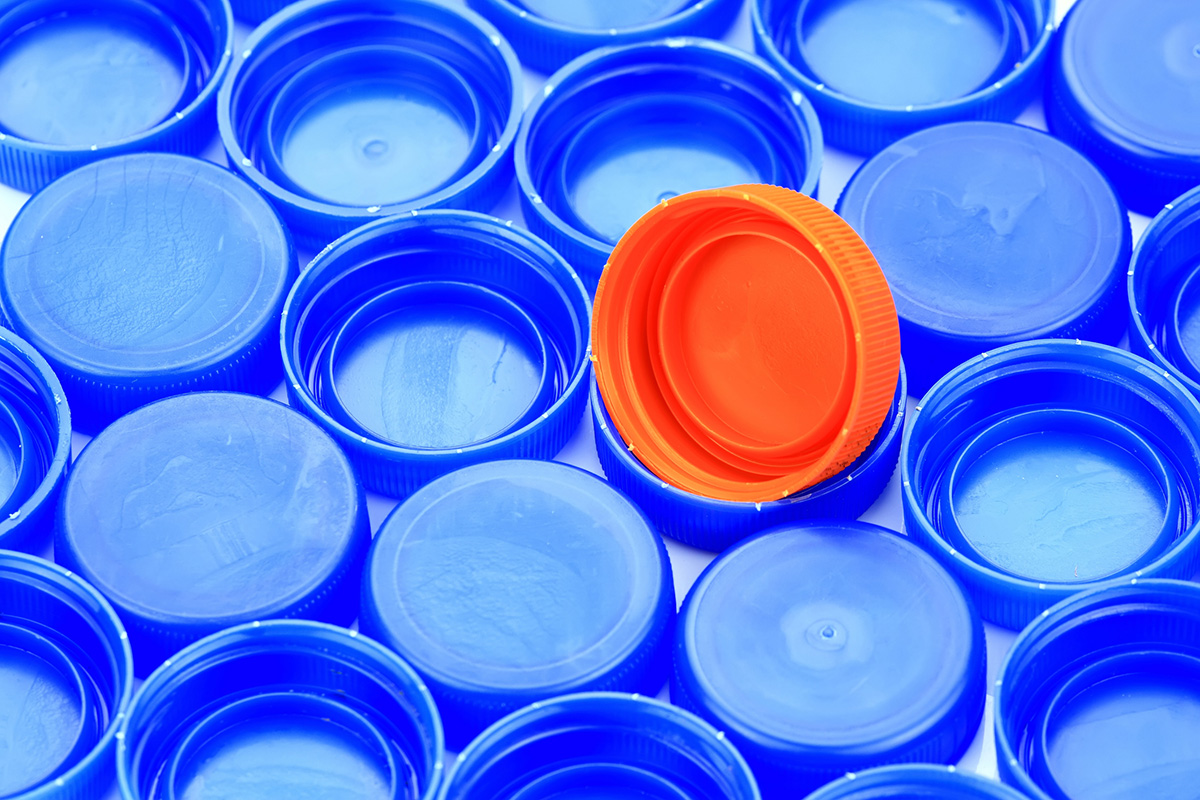
Bottle recycling includes a sink/float process where bottle regrind is separated. Bottle caps were mainly made from PP which was used on soda bottles. There were occasionally LDPE or EVA liners in the PP caps but at a low percentage. Polyolefin caps and labels float and bottles sink so everything that sank was PET and got recycled. The floating material was a PP/PE mix which initially was landfilled. Recyclers quickly figured out that the cap mix was 80/20, PP/PE and, if separated from the labels, could be colored black and used in PP compounding applications or for carpet backing.
Over time, the mix of PP / PE has shifted because of the emergence of bottled water that sources HDPE for its lids. HDPE is softer than PP and can’t handle the carbonation in soda, but is perfect for noncarbonated beverages.
Bottled water at first seemed like a ludicrous idea, i.e. “Why would anyone pay money for water in a bottle when you could turn on your kitchen tap and get it for free?” Bottled water was considered a pseudo luxury item and came in glass bottles with metal lids. My aunts and uncles in the late 70’s favored sparkling Perrier with a twist of lime. It was sold in 6-packsof glass bottles that were held in cardboard carriers for $0.69 a bottle. Perrier was pitched by Orson Welles and was more expensive than soda. “A sophisticated way to go to a cocktail party and not drink alcohol”. It was French, after all!
The evolution from specialty spring water and sparkling water to filtered water from any water source in the world took a couple decades. Water bottles with plastic caps were rare items in the 80’s but are now ubiquitous across the globe. More water bottles mean more HDPE caps in the recycling stream. The shift has gone from 80% PP and 20% HDPE in the early 80’s to 30% PP and 70% HDPE. As you would imagine, the properties of an 80/20 material very different in comparison to a 30/70 material. Compounding applications can still use some of the reprocessed resin but at diminishing concentrations. Higher levels of PE lower the flex modulus which is bad for the intended application. For the same reason it can no longer be used in carpet backing either.
Several FDA LNOs reference bottle caps as source material so companies trying to sell the end reprocessed product have moving raw material specs. A new product on the horizon is a PET bottle cap. It is addressing the problem of multimaterial packaging components. Origin Materials has a patent on a 100% PET closure and is trying to change the game for bottle recyclers again.
The cap industry has gone from metal to 80% PP to 30% PP and now PET is on the horizon – and converters wonder why the repro they buy isn’t always the same.